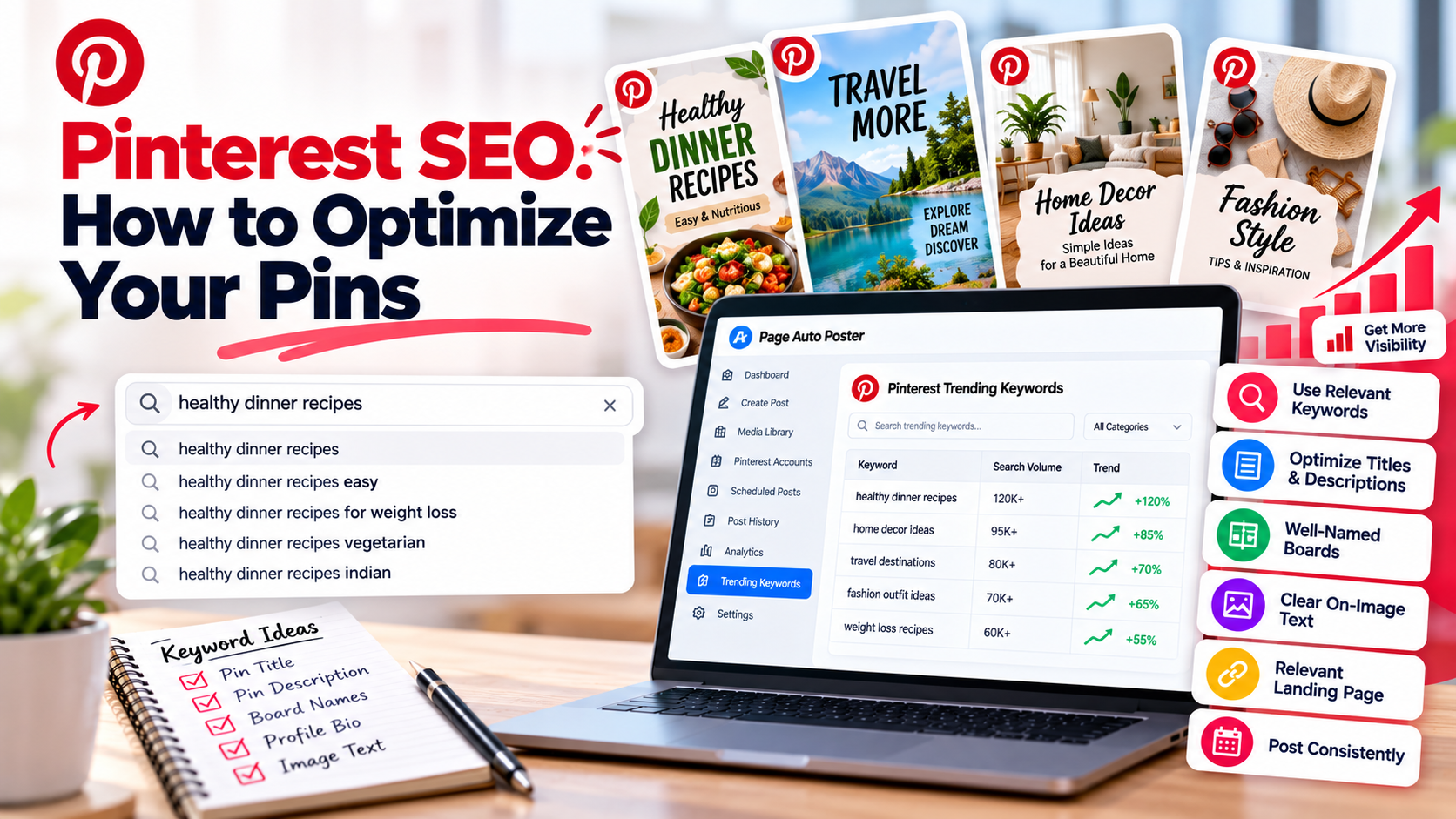
Many people treat Pinterest as a social network, but a large part of its value comes from search. People type in what they want to find, and Pinterest shows relevant Pins. Pinterest SEO is simply the practice of making your Pins easy to understand and easy to find for those searches.
Start with keyword research
Begin with the words your customers would actually type. Good places to look include:
- Pinterest's own search bar, where suggestions appear as you type.
- The related searches shown beneath results.
- Your own product names, categories and blog topics.
- The Trending Keywords page in the Pinterest panel of Page Auto Poster, which shows trends from Pinterest where that data is available.
Write down a primary keyword for each Pin and a few related phrases.
Where to use keywords
Pin title
Make the title clear and descriptive, with the main keyword near the start. Prioritise readability over cramming terms in.
Pin description
Write natural sentences that describe the Pin and what the viewer will find after clicking. Work related phrases in where they fit. Avoid long lists of keywords, which read poorly and add little.
Board names and descriptions
Use simple, searchable board names such as "Healthy Dinner Recipes" rather than clever phrases people will not search for. Add a short description explaining the board's topic.
Profile and Pin text overlay
Include relevant terms in your profile name and bio, and use a headline on the image that reflects the topic. Clear on-image text helps viewers immediately understand the Pin.
Keep Pins relevant to their destination
Pinterest is trying to connect searchers with useful content. A Pin whose image, text and landing page all describe the same thing is easier to match to a search and more satisfying for the person who clicks.
Be consistent
Regular publishing around your core topics helps your account become associated with those subjects. Scheduling makes this easier, since you can prepare several keyword-focused Pins at once and publish them over time.
Measure and refine
- Pick one topic and publish several Pins using related keywords.
- Check impressions and engagement in your Pinterest analytics.
- Note which phrases and styles attract more attention.
- Use that learning in the next batch.
Common SEO slip-ups
- Stuffing the description with repeated keywords.
- Using vague titles such as "Great idea".
- Leaving boards without descriptions.
- Pinning to boards that do not match the Pin's topic.
Pinterest SEO takes patience, because Pins are often discovered gradually. Focus on clarity and relevance and build up your library of well-labelled Pins over time. Our Pinterest page explains how Page Auto Poster supports this workflow.
Share This Article
Was this article helpful?
Let us know so we can keep improving our guides.